
Coffee is more than a drink – it’s a craft with its own language. On this page, you’ll discover essential coffee terms – and whether you’re training staff or refining your menu, understanding this vocabulary helps you create better coffee experiences and communicate like a true coffee professional.
Acidity
Describes fruity flavour notes in coffee.
Aftertaste
The flavour experience of the coffee once swallowed.
Americano
An espresso typically diluted with hot water either served alongside or brewed directly into the cup to create a milder coffee. Usually dosed with about 150 ml of water (temperature between 91.5-95.5°C). The espresso can also be brewed directly into the water.
Arabica
One of the main coffee species, with numerous varieties, including Bourbon and Typica – the foundation of Arabica coffee beans.
Aroma
The scent profile of the coffee, assessed either from the dry grounds or the brewed coffee surface.
Baked
A term used for coffee that has been over-roasted, leading to muted or flat flavour notes. Can also happen due to over-extraction during brewing.
Balance
When a coffee’s sweetness, bitterness, and acidity are in harmonious proportion.
Barista
A modern coffee brewer with knowledge of brewing techniques and coffee processes.
Beans
Coffee is brewed from the beans inside the coffee cherry.
Bitterness
Usually perceived at the back of the tongue or the palate, and most noticeable in dark- roasted coffee.
Body/Mouthfeel
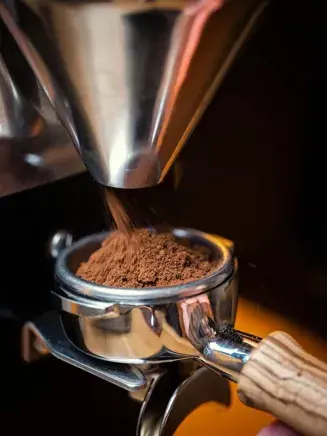
The sensation of coffee on the palate
Brew Time
The time water is in contact with the coffee grounds during brewing.
Caffeine
Arabica coffee typically contains 1.2 mg caffeine per 100 g, while Robusta contains 2.9 mg per 100 g.
Clean Cup
A term used to describe coffee with a clear, distinct flavour.
Coffee Cherry
The fruit of the coffee plant, usually containing two beans. Grown in tropical regions near the equator.
Coffee Scale
A scale used during coffee brewing.
Coffee Substitute
A roasted product made from chicory root mixed with rye and sugar beet. Historically used as a coffee replacement during shortages, for example during wartime rationing.
Coffee Syrup
A flavoured syrup added to coffee drinks.
Crema
The creamy, golden layer of foam that forms on the surface of an espresso, created by high pressure (typically around 9 bars) forcing gases out during the brewing process.
CSC (Certified Specialty Coffee)
A quality certification that sets standards for aspects such as cultivation and roasting.

Cupping
A method used to taste and evaluate coffee, either to identify defects or assess potential flavour notes.
Dark Roasted
Coffee with a very full body and low acidity.
Decaf
Coffee that has had most of its caffeine removed through methods such as the Swiss Water Process.
Doppio
A double espresso - two espresso shots served in one cup.
Dose/Strength/Brew Ratio
The proportion of coffee to water used in brewing – often referred to as the “brew ratio”.
Espresso
Coffee brewed under pressure. Espresso means “quick” in Italian, reflecting the short preparation time. Typically, an espresso shot is 25–35 ml, depending on variety and roast.
Espresso Shot
A term used to describe a single brewed espresso.
Green Beans
Raw, unroasted coffee beans.
Grind Size
Refers to how fine or coarse the coffee is ground.
Latte Art
Patterns created on espresso-based milk drinks by skilled pouring of steamed milk.

Light Roast
A roast level that preserves more of the coffee’s natural flavours and aromas.
Lungo
An espresso shot extracted for a longer time, resulting in a larger volume.
Medium Roast
A roast that preserves less of the natural flavours and aromas but offers more body.
Mellow
A term describing a balanced coffee without strong flavours or aromas.
Milk Foam
Foamed milk created by steaming, ideally with microfoam bubbles that produce a creamy, silky texture.
Ristretto
A concentrated espresso shot – for example, 20 g of coffee to 38 g of espresso liquid, resulting in a brew ratio of about 0.58. A typical espresso is 20 g of coffee to 40 g of liquid.
Roasting
The process that develops coffee’s flavour and aroma through caramelisation and Maillard reactions.
Robusta
A resilient coffee species often used in blends to add strength and character to the coffee.
Steaming
The process of heating and frothing milk for espresso-based milk drinks.